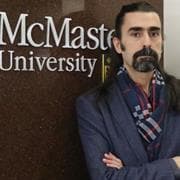
Dr. Mesut Yılmaz is an Adjunct Assistant Professor at McMaster University and a researcher at the Centre for Human Rights and Restorative Justice. His expertise includes global maritime trade, international economics, and the historical foundations of today’s interconnected economy.
His work examines how global trade systems, particularly shipping and logistics, including containerization, have evolved over time and continue to shape patterns of economic development and inequality. He analyzes the role of institutions, law, and governance in shaping global markets, focusing on long-term transformations in maritime trade and global supply chains. His research also engages contemporary policy debates, including sustainable development and the “right to development,” linking historical analysis to present-day global challenges.
Dr. Yılmaz holds a PhD in International Economics from Marmara University and a Foundation Diploma from the Institute of Chartered Shipbrokers (London, UK), reflecting specialized training in global shipping and maritime trade. He has extensive international academic experience across Europe, Africa, Central Asia, and North America. He has held professorial and leadership roles at institutions including Gediz University (Turkey), Nile University (Nigeria), and Süleyman Demirel University (SDU in Kazakhstan), where he served as Dean. His visiting appointments include the University of Birmingham, alongside research affiliations in Malaysia, South Africa, and the United States. This global academic trajectory informs his comparative and historically grounded approach to economic systems and development.
Prior to joining McMaster, he held academic and leadership positions across multiple regions, contributing to a broad international perspective on higher education and economic systems. He is currently involved in major international research collaborations funded by Canada’s Social Sciences and Humanities Research Council (SSHRC), including projects on democratic innovation (Participedia) and on truth commissions and reconciliation. His interdisciplinary work brings together economics, history, and public policy to examine institutional change and its implications for contemporary global challenges.
In addition to his academic research, Dr. Yılmaz has experience in business analytics and e-commerce, applying data-driven methods to real-world economic activity. He integrates these approaches into both his research and teaching, using tools such as data analysis, text mining (NVivo), and digital methods to study global economic trends.
Dr. Yılmaz’s work is particularly relevant to ongoing public discussions on globalization, supply chains, dispute resolution, economic resilience, and equitable development, positioning him as a resource for media commentary and public engagement.